My tour of the Staatsoper - a post to follow, gave me an opportunity to photograph one of the set pieces I did like, though not in it's full, staged glory:
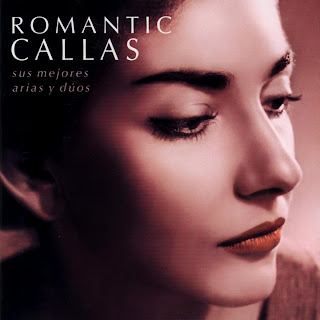
Maria Callas & Victoria de los Angeles Maria Callas Maria Callas’ renown as La Divina is of course legendary. Her legacy, however, is equally clearly controversial. Walter Legge, producer of many of her recordings, describes her vocal assets as part of a larger section on the same in Jürgen Kesting’s Maria Callas . Her three octave range, distinctive timbre, sizable voice, a potential darkness in the middle range, easy coloratura , and access, if not security in the top notes. Perhaps even more of note is Kesting’s description of the dichotomy between “good” voices, lacking in naturally effortless technique but with great artistry, and “beautiful” voices whose effortless technique seems to be the end in itself. Kesting asserts that Callas fell into the former category. Kesting repeatedly addresses issues of style in relation to this categorization, noting Callas’ abilities to execute pianissimi , portamenti , true Bel Canto coloratura , and emotional shading. ...
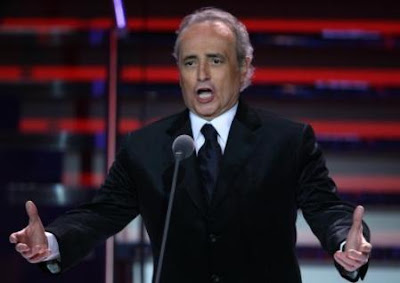
José Carreras & Georges Thill Note: Finding recordings of and writings on Georges Thill was rather difficult in comparison with the previous singers I’ve studied. Rather than abandon the pursuit entirely, however, I decided to focus a bit more heavily on José Carreras by listening to three full operas and excerpts. For Thill I was limited to excerpted arias from a variety of sources and highlights of a Charpentier opera. José Carreras José Carreras’ career defies easy explanation because of the multiplicity of factors that defined both his technique and his repertoire throughout. It remains unclear if his progression from Bel Canto lyric repertoire all the way through spinto repertoire caused or was caused by a darkening depth in the voice even as it retained its fundamental characteristics. Many critics questioned the function conductors and fame played in role selection and a strong suspi...
A fellow voice major here at Lawrence caused me to recall an interesting trend in vocal classification among singers over the past century. Theoretically, beyond Soprano, Mezzo-Soprano, (the rare) Alto, Baritone, and Bass, voice types are governed by fächer a term hailing from Germany that describes a group of different fach (s) that further divide these voice types. Note that there are other terms that are used in countries that don't speak German, but by far fach is the most common word used to describe the idea. Rather than list fächer here, as that isn't the point of this article, I will direct you to look them up here on Wikipedia (note this list is not entirely accurate, as there are some omissions (such as absence of the leggiero tenor) and the terms are not clearly defined even among experts). All the great singers that opera lovers enjoy thinking about and listening to should technically be able to be classified by these fächer . However, save for a few except...



Comments
Post a Comment