My tour of the Staatsoper - a post to follow, gave me an opportunity to photograph one of the set pieces I did like, though not in it's full, staged glory:
Dietrich Fischer-Dieskau & The Deep Voice Principle Note: Suitable baritones who fit the subject of this project were substantially more difficult to find than singers of previous voice types. Dietrich Fischer-Dieskau fit the bill perfectly because of his experience in a variety of operatic repertoire and in art song, but few others did. I have written at length about Fischer-Dieskau and then addressed this problem itself. Dietrich Fischer-Dieskau In order to study Dietrich Fischer-Dieskau I used assorted recordings of art songs along with three recordings of longer works. The assorted recordings of art song were of pieces I had in my own collection as well as the seminal Erlkönig. I used a video recording of Winterreise in 1979 with Alfred Brendel at the piano, a recording of Rigoletto under the direction of Rafael Kubelik in 1964, and an opera film of Le nozze di Figaro under Karl Böhm in 1...
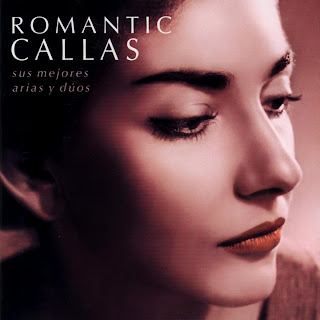
Maria Callas & Victoria de los Angeles Maria Callas Maria Callas’ renown as La Divina is of course legendary. Her legacy, however, is equally clearly controversial. Walter Legge, producer of many of her recordings, describes her vocal assets as part of a larger section on the same in Jürgen Kesting’s Maria Callas . Her three octave range, distinctive timbre, sizable voice, a potential darkness in the middle range, easy coloratura , and access, if not security in the top notes. Perhaps even more of note is Kesting’s description of the dichotomy between “good” voices, lacking in naturally effortless technique but with great artistry, and “beautiful” voices whose effortless technique seems to be the end in itself. Kesting asserts that Callas fell into the former category. Kesting repeatedly addresses issues of style in relation to this categorization, noting Callas’ abilities to execute pianissimi , portamenti , true Bel Canto coloratura , and emotional shading. ...
George London & Giorgio Tozzi George London For my study of bass-baritone George London I listened to two Metropolitan Opera radio broadcasts: a 1959 performance of Don Giovanni , and a 1973 production of Der fliegende Holländer , both under the baton of Karl Böhm and with London in the title role. Incidentally, the latter also featured Giorgio Tozzi as Daland. I will deal with this in a separate section as it features both artists and focus here on Don Giovanni along snippets of Boris Gonduov . The Metropolitan Opera’s MetOnDemand service describes this performance of Don Giovanni as follows: “When George London stepped on stage as the legendary lover Don Giovanni, audiences gasped. Handsome and effortlessly charismatic, he promised to fulfill every woman’s desire. No wonder the beautiful Lisa Della Casa (Elvira) didn’t want to...


Comments
Post a Comment